4 – 20
Units per project
Strategy 02 · MF–Dev
Ground-up four to fourteen unit buildings — sold stabilized, or refinanced into term debt and held.
Underwriting targets, not promises or guarantees. Individual investments may vary; final parameters are governed by each investment's definitive documents.
The Reasoning
Los Angeles is structurally short of housing, and the law has recently made small buildings far easier to build.
The supply case is not a forecast — it is arithmetic. Los Angeles has permitted housing well below household formation for years, and the constraint has been regulatory as much as economic. A sequence of state legislation has shifted meaningful categories of small multifamily from discretionary approval into ministerial pathways, which removes the political risk that historically made these projects unfinanceable.
Four to fourteen units is a deliberate band. Below four, the economics do not carry the fixed costs of development. Above roughly fifteen, projects begin crossing thresholds — financing complexity, prevailing-wage exposure, and the size at which institutional developers compete — that erase the advantage of being small and fast.
The structural benefit of this strategy is optionality at the end. A stabilized building can be sold to an investor at a cap rate, or refinanced into term debt and held. That choice is made at completion, with real market information, rather than committed to at acquisition. It means we are never forced to sell into a bad cap-rate environment to return capital.
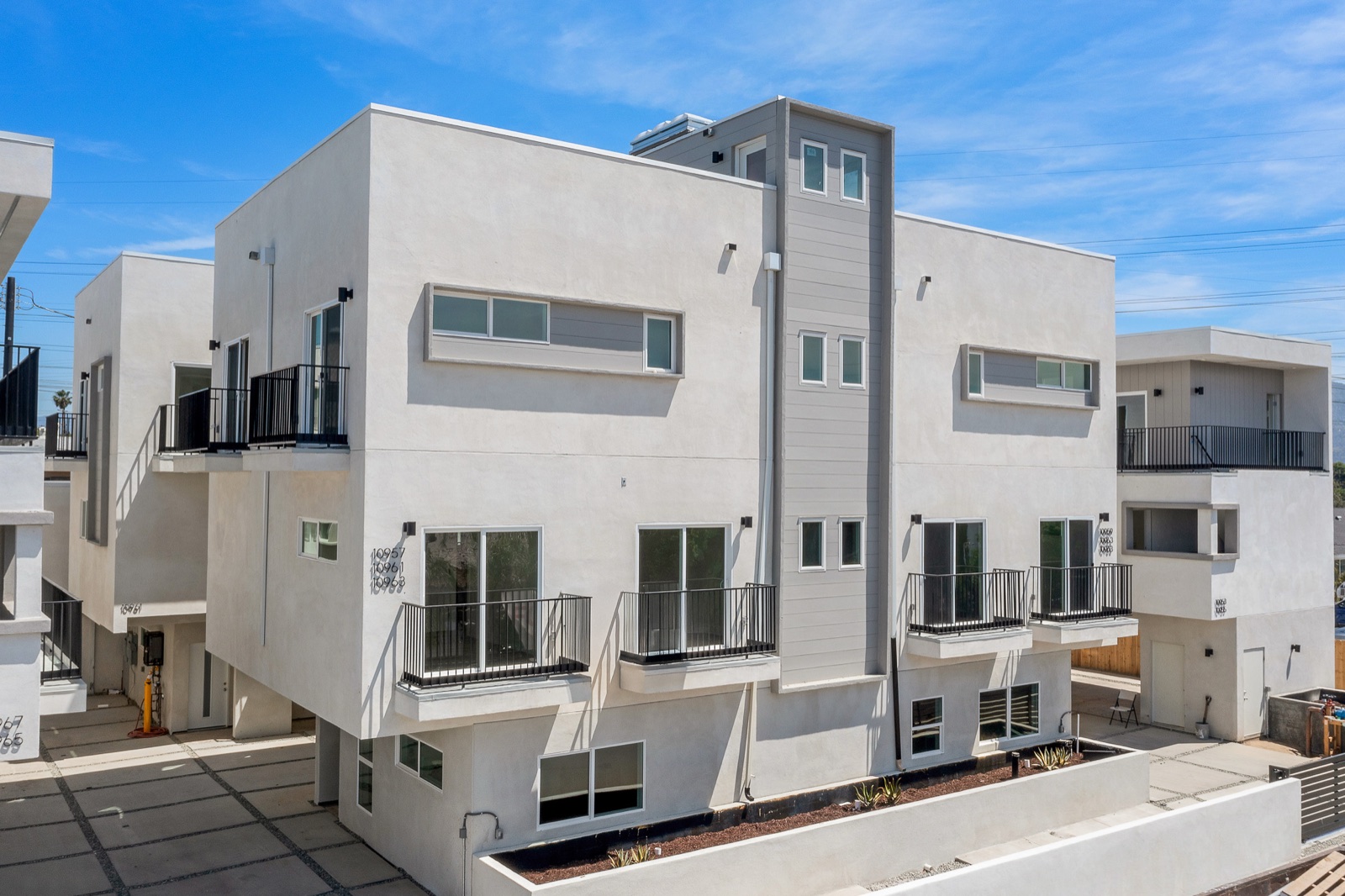
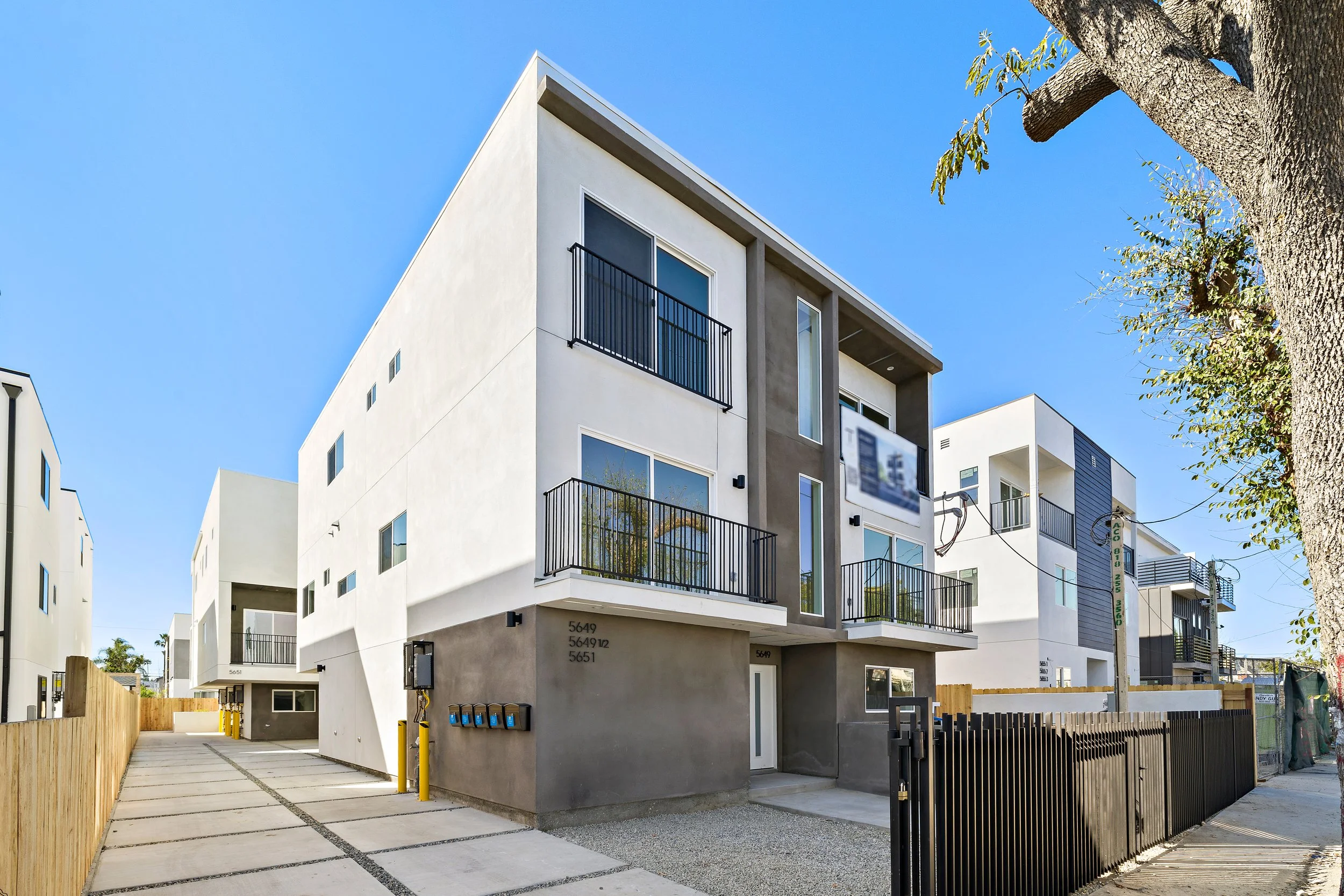
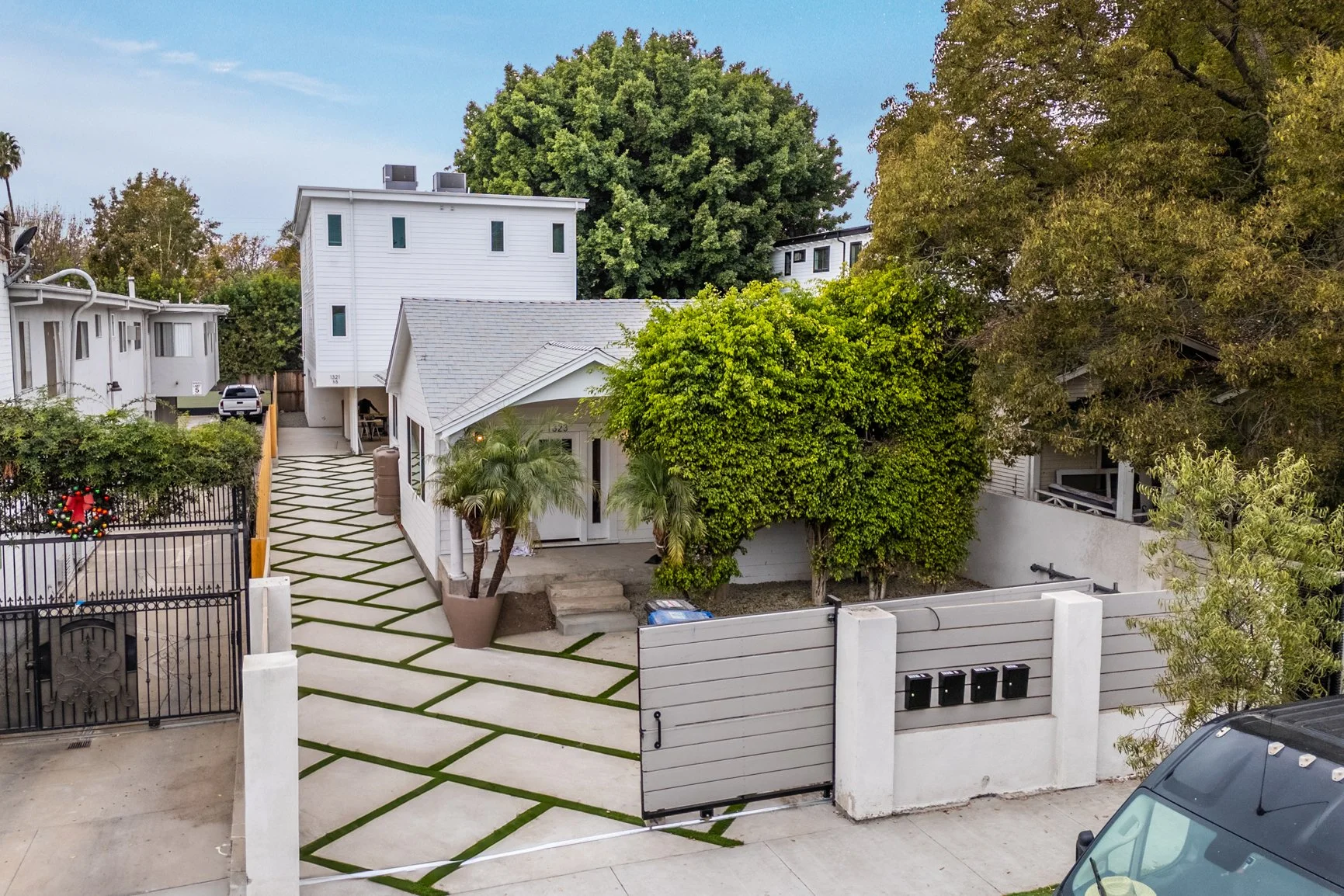
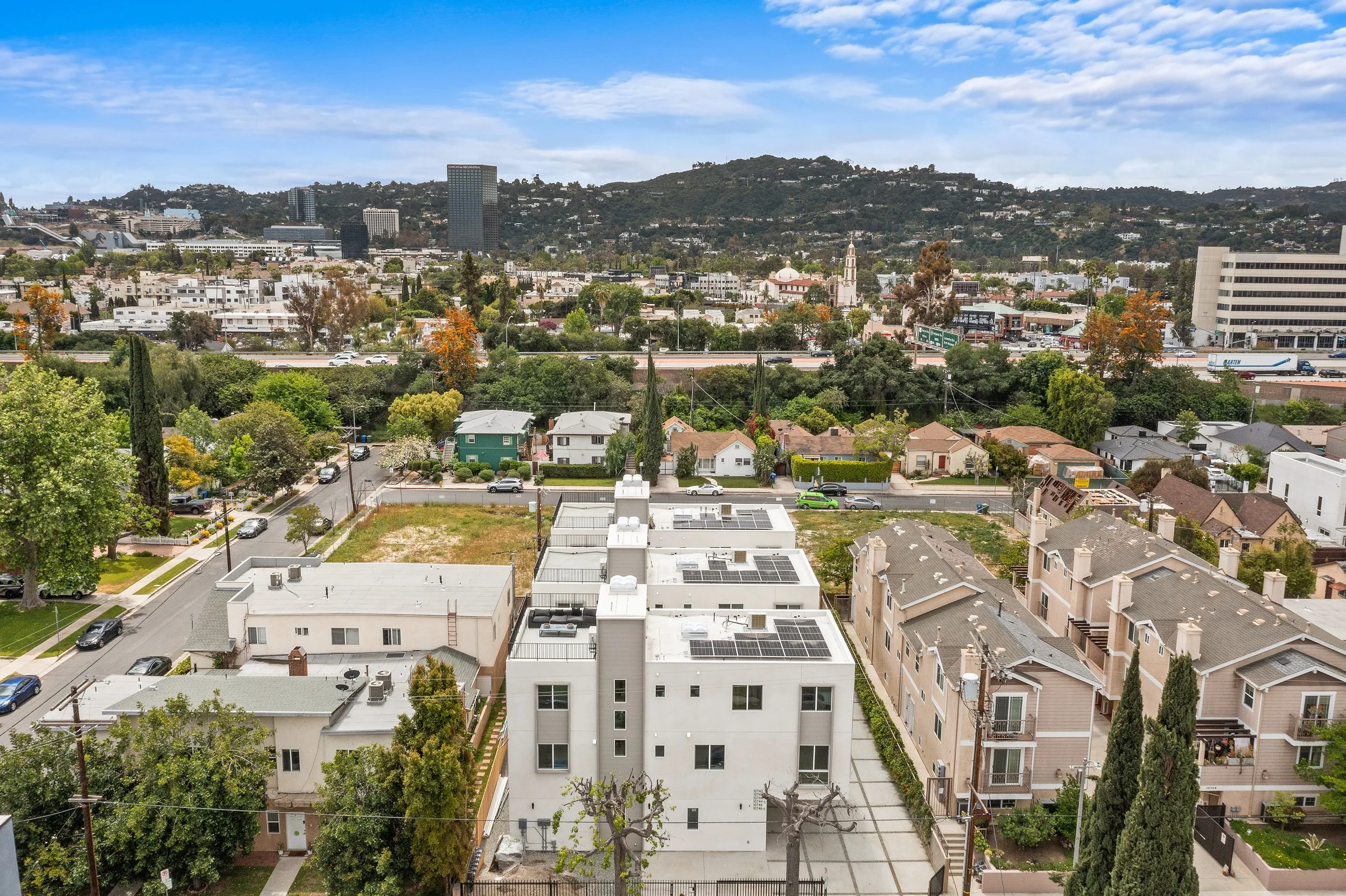
Three of our four delivered buildings were refinanced and retained. 10957 Calvert — fourteen units — carries an equity mark of roughly $3.30M against $1.15M invested. Those marks are unrealized: they are appraised value less first trust deed debt, not proceeds, and they will not become proceeds until the buildings trade.
How It Works
Concentrated in North Hollywood and Hollywood-adjacent submarkets with deep, consistent rental demand.
Large enough to carry development cost, small enough to stay below the thresholds that attract institutional competition.
Sell stabilized or refinance and hold — the choice is made with market information, not assumed at acquisition.
Refinance discipline targets DSCR at or above roughly 1.20–1.25x, with coverage disclosed per asset.
Track Record
The three retained buildings carry $15.85M of combined stabilized value, roughly $938K of annual net operating income, and a 1.33x blended DSCR at 100% occupancy. Those figures are unrealized equity marks per the SREO dated 7/14/26, not proceeds.
No boutique multifamily project is currently in entitlement or construction. The platform's active development capacity is presently committed to fee-simple subdivisions and the tenancy-in-common project, and new multifamily acquisitions would be capitalized through future project-specific offerings.
What Can Go Wrong
Every strategy has a failure mode. These are the ones specific to this one — the complete risk disclosure for any investment lives in its offering documents.
Future Opportunities
Future projects in this strategy are capitalized through new project-specific offerings — an 8% preferred return paid before the sponsor participates, Class A participation in the profits, and our own capital in every deal. Terms shown are typical of prior offerings and are not an offer; the final terms of any investment are governed solely by that project's private placement memorandum and operating agreement. Get in touch and we'll walk you through the model, the pipeline, and what a specific offering looks like.
Contacting us is not an offer, commitment, or investment. Any offering is made only through definitive offering documents to eligible investors.