
California's Starter Home Revitalization Act (SHRA) is the most consequential change to small-lot residential development in a generation. Two bills built it: SB 684, which took effect in 2024 and applies to multifamily-zoned land, and SB 1123, effective July 1, 2025, which extended the same treatment to vacant single-family lots.
Together they let a qualifying site be split into as many as ten fee-simple parcels and approved ministerially — no discretionary hearing, no CEQA review, and a 60-day clock. For infill developers in Los Angeles, that is a different risk profile than the entitlement path most residential projects still run.
This guide covers what each bill does, who qualifies, how they differ from SB 9, and what the standards actually are. It is written from the perspective of a developer running these projects, not a summary of the bill text.
What are SB 684 and SB 1123?
Both amend the Starter Home Revitalization Act, which aims to increase homeownership by streamlining subdivision approval for projects of up to 10 units.
SB 684 created a streamlined ministerial approval process for qualifying housing developments in multifamily zoning districts. Ministerial means the local agency has no discretion: if the project meets the objective criteria, it must be approved. No public hearing, and no CEQA review.
SB 1123 extended that same process to qualifying projects on vacant lots in single-family zoning districts, effective July 1, 2025. It also refined the standards — adding a definition of “net habitable square feet,” removing minimum frontage requirements, and, importantly, adding tenancy in common to the list of permitted ownership structures.
Who qualifies?
The site itself has to clear several thresholds before the project design matters at all:
- Site size — no larger than 5 acres in multifamily zones, or 1.5 acres if vacant and zoned single-family.
- Urban context — at least 75% of the site perimeter must adjoin (or be separated only by an improved public right-of-way from) parcels developed with qualified urban uses: residential, commercial, retail, public institutional, or transit facilities.
- Legal parcel within an incorporated city, urbanized area, or urban cluster, served by public water and municipal sewer.
- Not previously split under SB 9 or the Starter Home Revitalization Act.
- Environmental screens — the site cannot sit in a high or very high fire hazard severity zone, delineated earthquake fault zone, special flood hazard area, regulatory floodway, wetlands, protected species habitat, hazardous waste site, or land under a conservation easement.
That last screen does real work in Los Angeles. A large share of hillside inventory is disqualified outright by the fire hazard severity zone criterion, which pushes these projects toward flat urbanized submarkets.
What the standards actually are
| Standard | Requirement |
|---|---|
| Maximum lots | 10, excluding a remainder parcel |
| Maximum units | 10 dwelling units |
| Average unit size | No more than 1,750 net habitable sq ft |
| Minimum new lot size | 600 sq ft (multifamily) / 1,200 sq ft (vacant single-family) |
| Lot width, depth, frontage | No local minimum may be imposed |
| Side and rear setbacks | Capped at 4 ft from the original lot line |
| Setbacks between units | Not required, except under the California Building Code |
| Floor area ratio | Local agency cannot impose below 1.25 (8–10 units) or 1.0 (3–7 units) |
| Parking | No more than 1 space per unit; none required near qualifying transit |
| Minimum density | At least 66% of maximum allowable density (non-housing-element sites) |
| Approval timeline | 60 days from a complete application |
The setback and FAR floors are what make these projects pencil. A 4-foot maximum side and rear setback from the original lot line, with no required separation between units beyond building-code minimums, permits site plans that conventional subdivision standards would make impossible on a small parcel.
SB 684 vs. SB 1123 vs. SB 9: what's the difference?
| SB 684 | SB 1123 | SB 9 | |
|---|---|---|---|
| Applies to | Multifamily-zoned lots | Vacant single-family-zoned lots | Single-family lots |
| Maximum units | 10 | 10 | 4 (2 lots × 2 units) |
| Approval | Ministerial, no CEQA | Ministerial, no CEQA | Ministerial |
| Effective | 2024 | July 1, 2025 | January 1, 2022 |
| Ownership forms | Fee simple, CID, co-op, CLT | Adds tenancy in common | Fee simple |
The practical distinction is scale. SB 9 tops out at four units on a single-family lot. The Starter Home Revitalization Act reaches ten — and a site cannot use both, since a lot previously split under SB 9 is disqualified. Choosing the pathway is an underwriting decision made before acquisition, not after.
The tenancy-in-common provision — and why fee simple is still the better exit
SB 1123 added tenancy in common to the permitted ownership structures, alongside fee-simple lots, common interest developments, housing cooperatives, and community land trusts. It is a real expansion, and it is worth understanding. It is also, for most projects on this pathway, not the structure you want.
Permitted is not the same as optimal. The entire point of the Starter Home Revitalization Act is that it makes a fee-simple subdivision ministerially approvable on parcels where that was previously slow or impossible. Once a project qualifies, electing TIC gives that advantage back.
The difference is financing. Fee-simple parcels get individual APNs, and an individual APN is what lets a buyer use a conventional mortgage. A tenancy-in-common interest does not — it requires specialized fractional lending, which narrows the buyer pool to lenders and purchasers who will transact that way, and that narrower pool prices accordingly. On the same finished product, the fee-simple exit is generally the stronger one.
That does not make TIC a worse structure in general; it makes it a different tool for a different problem. Tenancy-in-common housing earns its place on parcels that cannot be subdivided at all, where the alternative is not a fee-simple exit but a bulk multifamily sale. On a site that qualifies under SB 684 or SB 1123, the subdivision is available — so take it.
What this means for Los Angeles infill
Los Angeles City Planning implements the SHRA through its own application process, with the 60-day ministerial clock running from receipt of a complete application. The binding constraints in practice are rarely the unit caps. They are site eligibility — the 75% urban-perimeter test and the environmental screens — and the minimum density floor, which requires at least 66% of maximum allowable density on sites not identified in the housing element.
There is also an unresolved tension in the statute that practitioners have flagged: on a maximum-size single-family site not identified in the housing element, the minimum density calculation can require more units than the 10-unit ceiling permits. Until that is reconciled, site-by-site analysis with the local agency is unavoidable.
Assemble Capital underwrites and develops projects on this pathway across Los Angeles — see our SB 684 and SB 1123 fee-simple subdivision strategy for how we approach acquisition, design, and release on these sites.
Frequently asked questions
What is SB 684?
SB 684 is a California law that created a streamlined, ministerial approval process for housing development projects of up to 10 units on multifamily-zoned lots, as part of the Starter Home Revitalization Act. Qualifying projects are approved without a discretionary hearing or CEQA review.
What is SB 1123?
SB 1123 amended the Starter Home Revitalization Act effective July 1, 2025, extending SB 684's streamlined ministerial process to vacant lots in single-family zones, and adding tenancy in common as a permitted ownership structure.
How many units can you build under SB 684?
Up to 10 dwelling units on up to 10 lots, excluding a remainder parcel. New units cannot exceed an average of 1,750 net habitable square feet.
How long does SB 684 approval take?
The local agency must approve or deny a complete application within 60 days.
Can you use SB 684 on a lot already split under SB 9?
No. A lot previously subdivided under SB 9 or the Starter Home Revitalization Act is not eligible.
Does SB 684 require CEQA review?
No. Qualifying projects are approved ministerially, which removes them from CEQA review.
What is the minimum lot size under SB 684?
600 square feet for newly created lots in multifamily zones, and 1,200 square feet for lots that were vacant and zoned single-family.
Sources and review
Provisions summarized from Los Angeles City Planning — SHRA/SB 684/1123, the California Government Code §65852.28 and §66499.41, and published practitioner guidance. Requirements differ by jurisdiction and are amended regularly — AB 130 also amended the SHRA effective July 1, 2025.
This article is general information about California housing law, not legal advice. Confirm current requirements with the local agency and qualified land use counsel before relying on any provision described here.
This article is for general informational and educational purposes only. It is not, and should not be relied upon as, investment, legal, tax, or accounting advice, and it is not a recommendation or endorsement of any strategy or investment. Consult your own financial, tax, and legal advisors before making any investment decision. See our full Risk Disclosures for additional information.
Related Reading
Keep going.
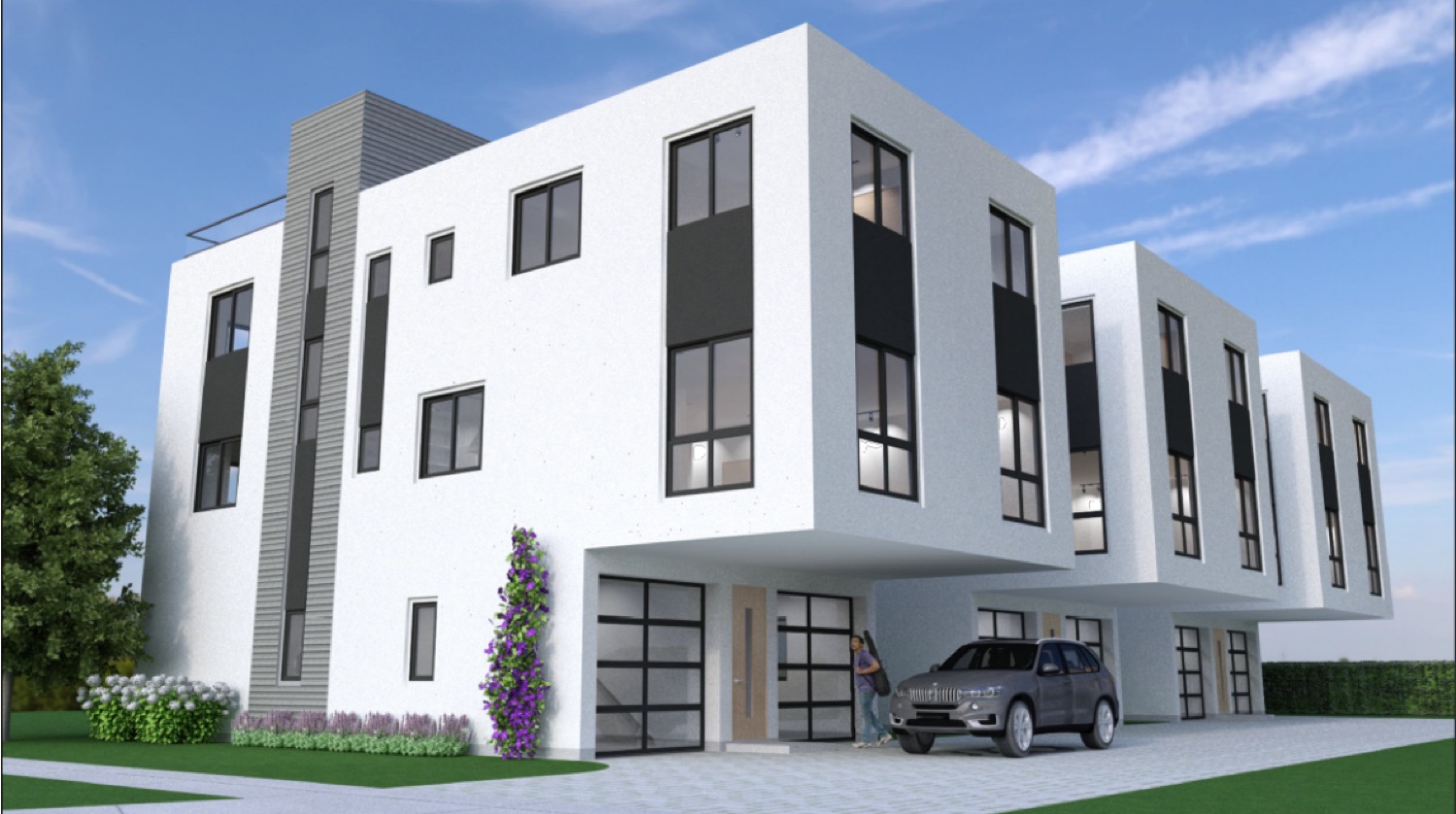
Or see how this plays out in practice: SB 684/1123 Fee Simple Subdivisions.
Future Opportunities
Want to invest in the next one?
Get in touch and we'll walk you through the model, the pipeline, and what a specific offering looks like.
Contacting us is not an offer, commitment, or investment. Any offering is made only through definitive offering documents to eligible investors.