
In most of the country, if you want to sell the units of a small apartment building to individual homeowners, you convert it to condominiums. In Los Angeles, for a large share of the existing stock, you cannot. Tenancy in common — TIC — is the structure that fills that gap, and it is why a form of ownership that is a curiosity elsewhere is a working strategy here.
This guide covers what a TIC property actually is, why it exists in Los Angeles specifically, how it compares to a condominium, how buyers finance one, and where the structure is the right tool rather than a workaround. It is written from the perspective of a developer who underwrites and executes these projects, not a general explainer.
What is a TIC property?
A tenancy in common is a form of co-ownership. Each owner holds an undivided fractional interest in the entire property — not a deeded box of airspace — and a separate written agreement gives each owner the exclusive right to occupy a specific unit.
That distinction is the whole thing. A condominium buyer owns a legally separate parcel with its own assessor's parcel number. A TIC buyer owns a percentage of one undivided parcel, plus a contractual right to live in unit 2. The building is never legally subdivided; the rights are allocated by contract instead.
Everything else follows from that. The TIC agreement is not boilerplate — it is the operating document that defines occupancy rights, how the mortgage and property taxes are allocated, how expenses and reserves are shared, what happens when someone wants to sell, and how disputes get resolved. In a condominium, most of that is handled by statute and a recorded declaration. In a TIC, it is handled by the agreement, which is why the quality of the document matters more than buyers usually expect.
Why TIC exists in Los Angeles
TIC is not popular in Los Angeles because it is elegant. It is popular because the alternative is frequently unavailable.
Converting an existing rental building to condominiums is a subdivision. It requires a map under the Subdivision Map Act and it runs through a discretionary local process — and Los Angeles layers additional restrictions on top of that, particularly where the building contains units subject to the Rent Stabilization Ordinance. For much of the older small-multifamily stock, condominium conversion is either legally closed or so slow and uncertain that no one underwrites it.
A TIC is not a subdivision. No new parcels are created, so no map is required. That is the entire structural advantage: TIC reaches the for-sale buyer in buildings that cannot be condo-mapped.
Two cautions belong here, and they are the ones most often skipped. First, tenant protections do not evaporate because the ownership form changed — buildings with rent-stabilized tenants carry obligations that survive a sale, and clearing occupancy is governed by state and local law, including the Ellis Act where it applies. Second, several California jurisdictions regulate TIC conversions directly. These rules change, and they differ block to block. Any specific building needs current advice from qualified California real estate counsel before anyone assumes a TIC exit is available.
TIC vs. condo: what actually differs
| Condominium | Tenancy in Common | |
|---|---|---|
| What you own | A separate legal parcel (your unit) plus a share of common area | An undivided percentage of the whole property |
| Assessor's parcel number | Individual APN per unit | One APN for the entire building |
| Requires a subdivision map | Yes | No |
| Governing document | Recorded CC&Rs, governed largely by statute | The TIC agreement, governed largely by contract |
| Occupancy right | By deed | By written agreement among owners |
| Typical financing | Conventional, conforming-eligible | Fractional TIC loan from a portfolio lender |
| Property taxes | Billed individually | One bill, allocated by agreement |
| Buyer pool at resale | Broad | Narrower — limited to buyers and lenders who transact in TIC |
The honest summary: a condominium is the cleaner asset, and where a condo map is genuinely available it is usually the better outcome. TIC earns its place where that option is closed.
TIC vs. joint tenancy: how title is actually held
Tenancy in common is one of several ways two or more people can hold title to California real property. The comparison that matters most — and the one people most often get wrong — is against joint tenancy. The difference is not cosmetic. It determines what happens to an owner's share when they die, and whether shares have to be equal.
| Tenancy in Common | Joint Tenancy | |
|---|---|---|
| Ownership shares | Can be unequal — 60/40, 25/25/50, any split | Must be equal |
| Right of survivorship | No | Yes |
| On an owner's death | The share passes through their will or estate | The share passes automatically to the surviving joint tenants |
| Transferring a share | An owner may sell or transfer their interest | A transfer generally severs the joint tenancy as to that share |
| When acquired | Owners can acquire interests at different times | Traditionally requires the interests be created at the same time, in the same instrument |
| Typical use | Unrelated co-owners; investment and for-sale housing | Married couples and family members holding a home together |
Does tenancy in common have right of survivorship? No. That single fact is the practical dividing line. When a joint tenant dies, their interest passes automatically to the surviving joint tenants, outside probate. When a tenant in common dies, nothing passes automatically — the interest is part of their estate and goes wherever their will or California's intestate succession rules send it.
For a for-sale housing project, that is a feature rather than a drawback. TIC buyers are unrelated parties who want their own inheritable asset, not one that reverts to their neighbours. Unequal shares matter for the same reason: a two-bedroom unit and a studio in the same building are not worth the same, and TIC percentages are set to reflect that. Joint tenancy cannot express it.
California also recognises community property and community property with right of survivorship for married couples, which carry tax treatment that neither TIC nor joint tenancy provides. How any individual buyer should take title is a question for their own attorney and tax advisor — it depends on their marital status, estate plan, and who else is on the loan.
How tenants in common hold title in California
In California, a deed conveying property to two or more people who are not married is presumed to create a tenancy in common unless it expressly says otherwise. Joint tenancy has to be stated. That default is why TIC turns up so often in California title work without anyone having deliberately chosen it.
In a structured TIC project the choice is deliberate, and the percentages, occupancy rights and transfer rules are set out in the TIC agreement rather than left to the default. That is the difference between two friends who happen to hold title as tenants in common and a professionally structured building — not the form of ownership, but whether the agreement behind it was drafted to be lived in, financed, and eventually sold.
How TIC financing works
This is the question that decides whether a TIC project is executable, and the answer has changed materially in the last decade.
Historically, TIC buyers had two options: pay cash, or take a shared blanket loan in which every owner sat on a single mortgage against the whole building. The blanket structure created the obvious problem — each owner's credit exposure was tied to every other owner's ability to pay. One default became everyone's problem. That risk kept the structure marginal.
Fractional TIC financing changed that. Multiple lenders now write individual loans secured against an individual TIC interest, so each owner has their own mortgage, their own rate, and their own obligation. That is what makes TIC executable at scale rather than a niche cash-buyer product.
What buyers should still expect, relative to a conventional mortgage on a condominium:
- Portfolio products, not conforming loans. Fractional TIC loans are held by the originating lender rather than sold to Fannie Mae or Freddie Mac, so terms are set by that lender rather than by agency guidelines.
- A smaller lender set. A handful of specialists write this paper in California, not every bank.
- Pricing and down payment that reflect the above. Terms are generally less favorable than a conforming loan on a comparable condominium.
- Underwriting of the TIC agreement itself. Lenders review the document, not only the borrower. A poorly drafted agreement can make a building unfinanceable.
For a developer, that last point is the operational one. The TIC agreement is drafted long before the first unit is marketed, and it determines which lenders will lend in the building at all.
The tradeoff nobody should skip: absorption
A bulk sale is one transaction with one buyer. A TIC sellout is several transactions with several buyers, each securing their own financing on their own timeline, from a buyer pool that is narrower than the condominium market by construction.
That takes time, and time is the cost of the structure. A project underwritten on aggregate unit value but financed on a schedule that assumes a bulk-sale timeline is a project with a problem. The disciplined version sets the bulk-sale fallback value, the lender's partial-release terms, and the absorption assumption before acquisition — not after the first unit sits.
Where TIC is the right tool — and where it isn't
TIC is a structure for a specific situation: a small building whose units are worth materially more sold individually than the whole is worth sold to an investor, in a case where the building cannot be condo-mapped.
The economics come from who is bidding. An investor buying a three-unit building prices it on income — rents, expenses, a cap rate. Three separate homebuyers price the same square footage as places to live. On small buildings that spread is real, and capturing it is the entire thesis.
Where TIC is not the answer is equally important. If a site can be subdivided into fee-simple parcels, it generally should be. Fee-simple lots get individual APNs, individual APNs get conventional mortgages, and conventional mortgages get the widest buyer pool. That is why SB 684 and SB 1123 matter: on a qualifying site they make a fee-simple subdivision ministerially approvable, and electing TIC on such a site would trade a stronger exit for a weaker one. SB 1123 permits tenancy in common as an ownership form — but permitted is not the same as optimal.
The rule of thumb: subdivide when you can, TIC when you can't.
How TIC units are actually sold in Los Angeles
Two different sales happen in a TIC project, and it is worth keeping them apart. The units are sold to individual homebuyers — that is the exit. The investment in the project is a separate matter, offered privately to eligible investors under securities law. This section is about the first.
TIC units in Los Angeles are marketed much like any other for-sale home. They are listed on the MLS, shown at open houses, and bought by owner-occupants rather than investors — which is the entire point, since the homebuyer bid is what exceeds the cap-rate bid. What differs is the disclosure and financing work sitting behind the listing.
In practice, a few things shape how these sales run:
- Pricing sits between two reference points. Comparable condominiums set the ceiling, because a TIC generally trades at some discount to an equivalent condo to compensate for the financing and liquidity differences. The building's bulk investor value sets the floor. The strategy lives in that band, and where a particular unit lands depends on the submarket, the quality of the finish, and how well the TIC agreement reads to a lender.
- The buyer needs a lender who writes fractional loans. Not every mortgage broker has placed one. Sellers of TIC units typically identify lenders in advance so buyers are not left to discover the constraint mid-escrow.
- The TIC agreement goes out with the disclosures. Buyers — and their lenders and attorneys — read it. A document that allocates costs unclearly, or restricts transfer awkwardly, will show up as a financing problem rather than a legal one.
- Units generally release in sequence rather than all at once. Releasing gradually lets pricing respond to real demand instead of guessing at it, and it keeps the partial-release terms of the project debt manageable.
- Absorption sets the pace. Each unit waits on its own buyer securing their own financing. A three or four unit building sells over a window measured in many months, not weeks.
The operational discipline is unglamorous and it is most of the work: having the agreement drafted to be financeable before marketing begins, having lender relationships established rather than hoped for, and holding a bulk-sale fallback that is underwritten rather than assumed.
What this means for Los Angeles small multifamily
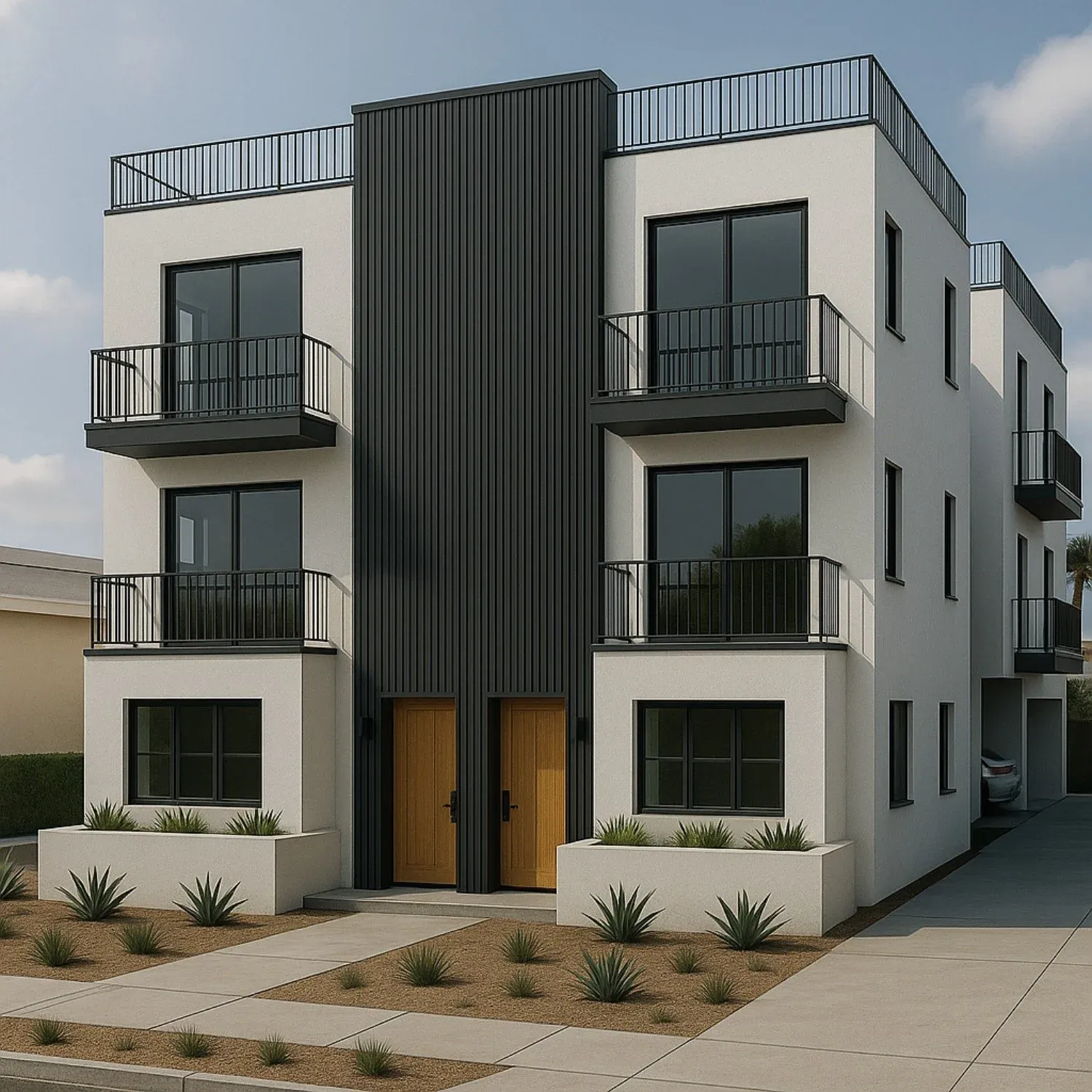
Los Angeles has a deep inventory of two-to-four-unit buildings, much of it older, much of it in neighborhoods where a homebuyer will pay a premium a cap-rate buyer will not. For the portion of that stock where condominium conversion is closed, TIC is the only structure that reaches the for-sale buyer at all.
That is a durable niche rather than a large one. It rewards operators who have run the process before — because the difficulty is not the concept, it is the sequencing: the agreement drafted to be financeable, the lender relationships established before marketing, the tenant and regulatory position confirmed at acquisition rather than discovered later, and the fallback underwritten from day one.
Working with Assemble Capital
Assemble Capital acquires small multifamily buildings in Los Angeles and executes exactly the strategy described here — structuring the tenancy in common, drafting the agreement to be financeable, lining up fractional lenders before marketing, and underwriting the bulk-sale fallback from the outset. We syndicate those projects with investors, and the principals invest alongside them in every deal. You can read how we approach the strategy or what we have completed.
If you are an accredited investor and want to understand how we underwrite and structure these projects, get in touch. Assemble Capital offerings are made only to accredited and otherwise eligible investors, and only through definitive offering documents — nothing on this page is an offer, a solicitation, or a recommendation to invest.
Frequently asked questions
What is a TIC property?
A tenancy-in-common property is one owned by two or more parties, each holding an undivided fractional interest in the whole property rather than a separately deeded unit. A written TIC agreement gives each owner the exclusive right to occupy a specific unit.
What is the difference between a TIC and a condo?
A condominium unit is its own legal parcel with its own assessor's parcel number, created through a subdivision map. A TIC is one undivided parcel in which owners hold percentage interests, with occupancy allocated by contract. Condos finance conventionally; TICs use fractional loans from portfolio lenders.
Why is TIC so common in Los Angeles?
Because condominium conversion of existing rental buildings is heavily restricted, particularly where units are subject to the Rent Stabilization Ordinance. A TIC is not a subdivision and requires no map, so it can reach for-sale buyers in buildings that cannot legally be condo-mapped.
Can you get a mortgage on a TIC in California?
Yes. Several California lenders write fractional TIC loans secured against an individual interest, so each owner carries their own mortgage rather than sharing a blanket loan. These are portfolio products rather than conforming loans, and terms are generally less favorable than a conventional mortgage on a comparable condominium.
Is a TIC a good investment?
That depends entirely on the specific building, its price relative to comparable condominiums, the quality of the TIC agreement, and which lenders will finance in it. TIC interests are less liquid than condominiums and sell into a narrower buyer pool. This article is educational and is not investment advice.
Do TIC owners share one property tax bill?
Generally yes. The property has a single assessor's parcel number, so one tax bill is issued and allocated among owners according to the TIC agreement.
What happens if a TIC owner wants to sell?
The TIC agreement governs. Most agreements permit an owner to sell their interest and the right to occupy their unit, often subject to notice provisions or a right of first refusal. The practical constraint is the buyer pool: the purchaser must be willing to buy a TIC interest and able to finance it.
Does tenancy in common have right of survivorship?
No. Tenancy in common does not carry a right of survivorship. When a tenant in common dies, their interest becomes part of their estate and passes under their will or by intestate succession, rather than automatically to the other owners. Joint tenancy is the form that carries survivorship.
What is the difference between joint tenancy and tenancy in common?
Joint tenancy requires equal shares and carries a right of survivorship, so a deceased owner's interest passes automatically to the surviving joint tenants. Tenancy in common allows unequal shares, has no survivorship, and lets each owner leave their interest to whomever they choose. Joint tenancy is typical for married couples; tenancy in common is typical for unrelated co-owners and for-sale housing.
Can a tenancy in common interest be inherited?
Yes. Because there is no right of survivorship, a tenant in common's interest passes through their estate to their heirs or beneficiaries. This is one of the reasons the structure suits unrelated buyers who want an inheritable asset.
How do tenants in common hold title in California?
A California deed to two or more unmarried people is presumed to create a tenancy in common unless it expressly states otherwise; joint tenancy must be stated. In a structured TIC project the percentages, occupancy rights and transfer rules are set out in a written TIC agreement rather than left to the default.
Sources and review
This article describes general California practice for tenancy-in-common ownership and small-multifamily conversion. Subdivision requirements arise under the California Subdivision Map Act; conversion, tenant-protection, and rent-stabilization rules are set by state law and by individual jurisdictions, and Los Angeles imposes requirements beyond the state baseline. Fractional TIC lending terms are set by individual portfolio lenders and change with the market.
This is general information about California real estate practice, not legal, tax, or lending advice. Rules differ by jurisdiction and building and are amended regularly. Confirm current requirements with the local agency, a qualified California real estate attorney, and a lender before relying on anything described here.
This article is for general informational and educational purposes only. It is not, and should not be relied upon as, investment, legal, tax, or accounting advice, and it is not a recommendation or endorsement of any strategy or investment. Consult your own financial, tax, and legal advisors before making any investment decision. See our full Risk Disclosures for additional information.


Future Opportunities
Want to invest in the next one?
Get in touch and we'll walk you through the model, the pipeline, and what a specific offering looks like.
Contacting us is not an offer, commitment, or investment. Any offering is made only through definitive offering documents to eligible investors.