
Insights
SB 684 in Santa Monica: Small-Lot Homes in a Supply-Constrained City
Oliver Thornton · October 24, 2026
General information only. This article is educational and is not legal, tax, financial, lending or investment advice. Do your own due diligence and confirm everything with your own qualified professionals before relying on it. Read the full disclaimer.
Few cities in Southern California need new starter homes more than Santa Monica, and few have been harder to build in. California’s SB 684 changes that for a specific kind of site: a multifamily-zoned lot in the flats that can be subdivided into several small fee-simple homes, approved ministerially with no public hearing.
Why Santa Monica Is Different
Santa Monica combines strong demand, limited new supply and a large share of rent-controlled housing. That last point matters most for SB 684: the law protects existing renters, and Santa Monica’s rent-control history means tenant history can disqualify many otherwise attractive lots. The sites that work are typically owner-occupied homes, or properties that have not been rented in years, on multifamily-zoned land.
A Recent Example: 1949 17th Street
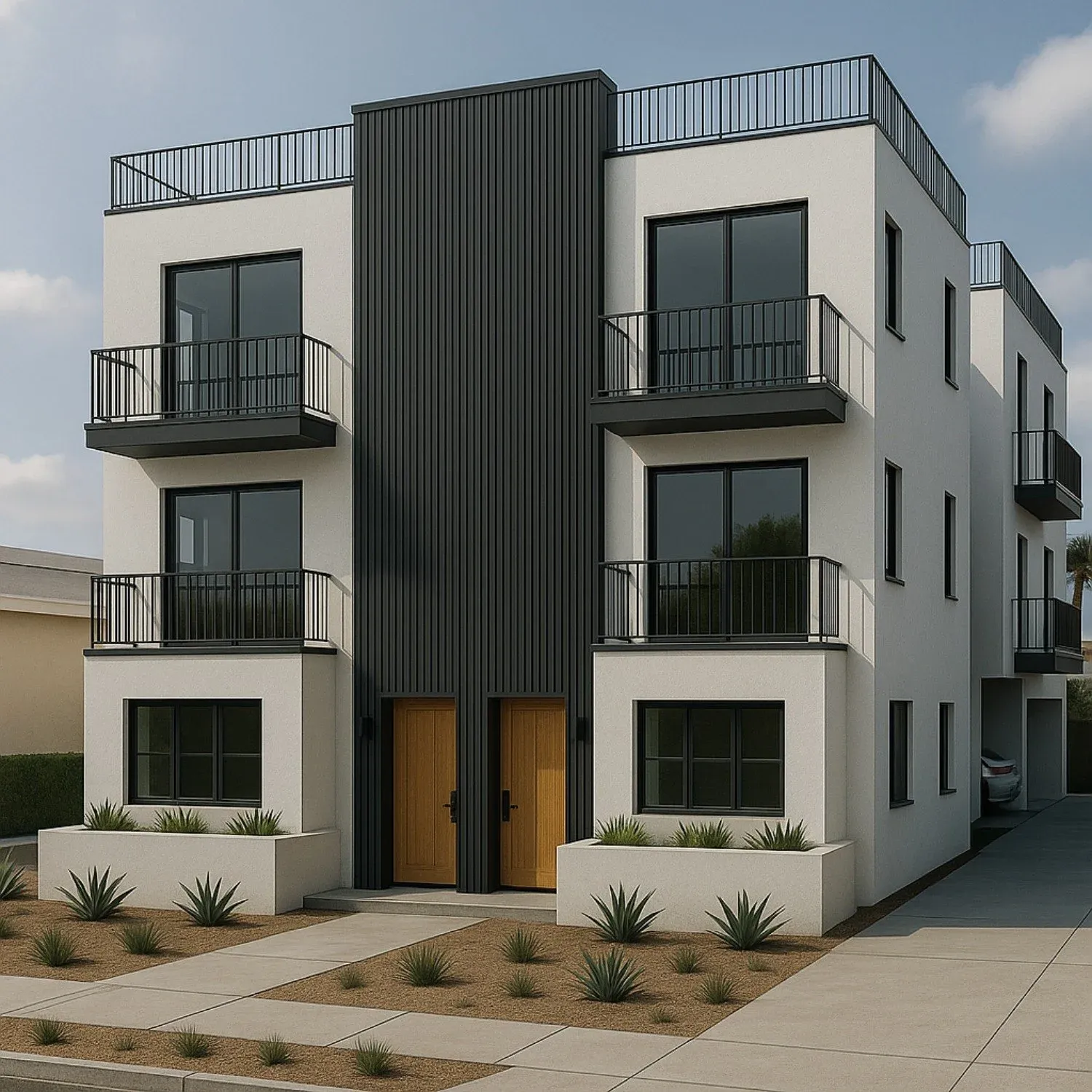
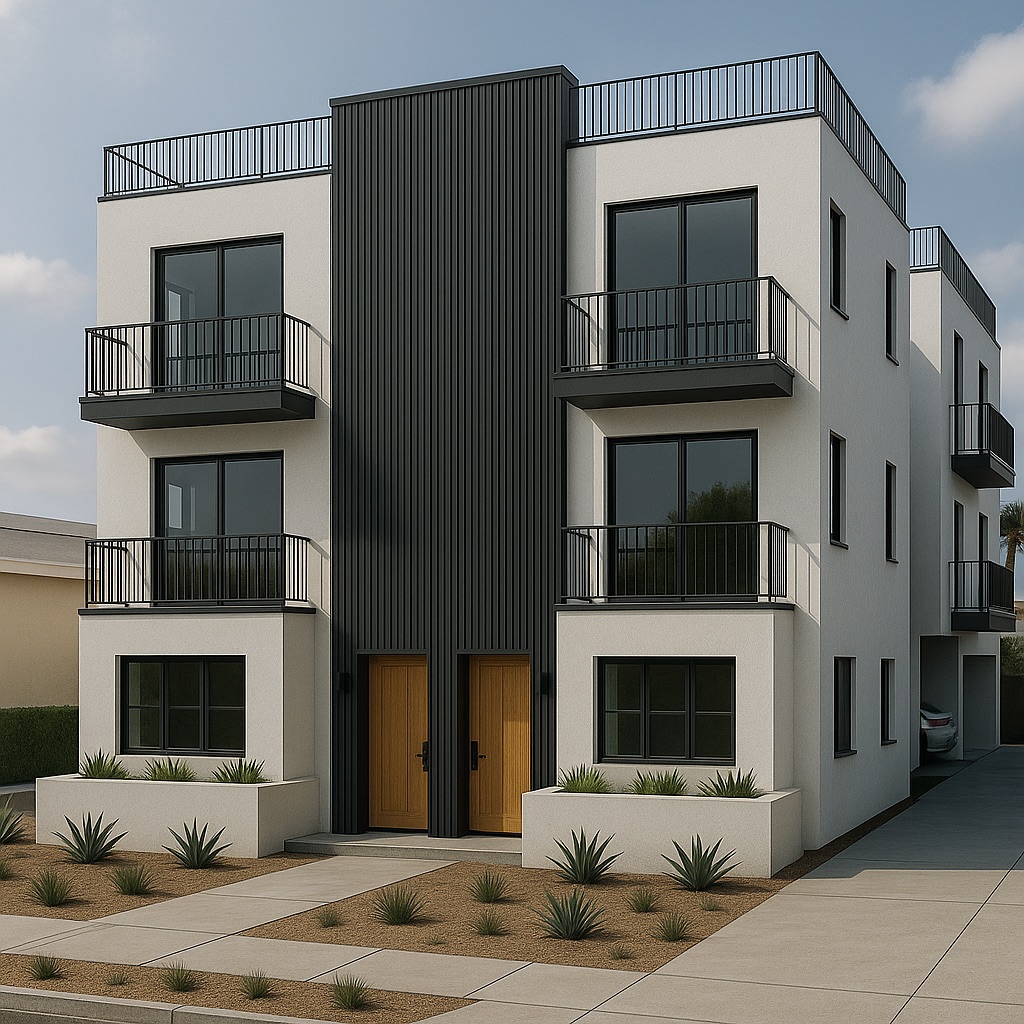
At 1949 17th Street, a principal-owned project developed through Thornton Development Group, the city approved nine fee-simple homes on one subdivided lot under SB 684. It was only the second SB 684 approval in Santa Monica, and it took about eight months from the start of entitlement to City approval. The property had not been used as rental housing in more than 30 years, which kept it clear of the rent-control issues that stop many sites. Eight of the planned homes are about 1,150 square feet and one is about 1,600, each on its own parcel with its own rooftop deck. The project is now near ready-to-issue permits, with construction expected to start in November 2026 (estimated).
What Makes a Santa Monica Lot Work
- Zoning. Multifamily zoning gives the clearest path; single-family lots qualify under SB 1123 only if vacant.
- Tenant history. Owner-occupied, or no rental history in the last five years, and no Ellis Act withdrawal in the last fifteen. See Ellis Act and tenant history.
- Size. Enough land for at least six homes; most strong sites are 6,000 square feet or more.
- Hazards. Outside fire hazard severity zones and the law’s other exclusions.
- Coastal review. Sites that need Coastal Commission review add time and uncertainty; we generally pass on them.
Taxes on Sale
Santa Monica is outside the City of Los Angeles, so Measure ULA does not apply. The city has its own transfer tax on higher-value sales, which sellers should factor into pricing. Entry-level fee-simple homes generally sell well below the price points where the steepest transfer taxes apply.
Thinking About Selling?
If you own a multifamily-zoned lot in Santa Monica with an older home on it, the land may be worth more to a small-lot developer than the house is to a typical buyer. Read selling your lot to an SB 684 developer, or send us the address for a quick read.
Frequently Asked Questions
Does SB 684 apply in Santa Monica?
Yes. SB 684 is state law and applies in Santa Monica to qualifying multifamily-zoned lots, with SB 1123 extending it to qualifying vacant single-family lots. The city processes applications under its own procedures.
How does Santa Monica rent control affect SB 684 sites?
Tenant history is one of the first screens. Sites with recent tenants or rent-controlled units can be disqualified or face additional requirements, so owner-occupied homes, or properties with no rental history, are the strongest candidates.
How long does SB 684 approval take in Santa Monica?
On 1949 17th Street, a principal-owned project, it took about eight months from the start of entitlement to City approval. Every site differs.
Does Measure ULA apply in Santa Monica?
No. Measure ULA applies only within City of Los Angeles limits. Santa Monica has its own transfer tax on higher-value sales.
Important Disclaimer
This article is published by Assemble Capital for general informational and educational purposes only. It is not legal, tax, accounting, lending, appraisal, real estate brokerage or investment advice, and it is not an offer to sell or a solicitation of an offer to buy any security. Laws, regulations, government programs, lending practices, market conditions and local procedures change often and vary by jurisdiction and by property. The information here may be incomplete, out of date or not applicable to your situation, and we have no obligation to update it.
No one, including investors, lenders, property owners, buyers, sellers, agents, brokers, wholesalers or developers, should rely on this article in making any decision. Before acting on any topic discussed here, independently verify the information and conduct your own due diligence with qualified legal, tax, financial, lending, appraisal and real estate professionals and the applicable government agencies.
References to projects, timelines, approvals, appraisals, financing, prices or market conditions are illustrative, may change, and are not predictions, promises or guarantees of any result. Past performance is not indicative of future results.
Reading this article or contacting us does not create an attorney-client, advisory, fiduciary, agency, brokerage or other relationship with Assemble Capital, its affiliates or its principals. Assemble Capital makes no representation or warranty, express or implied, as to the accuracy, completeness or timeliness of this content and, to the fullest extent permitted by law, disclaims all liability for any loss or damage arising from any reliance on it. Use of this site is subject to our Terms of Service and Risks & Disclosures.
Related Reading
Keep Going.
Or see how this plays out in practice: SB 684/1123 Fee Simple Subdivisions.
Work With Us
Investing, or Have a Property?
Contacting us is not an offer, commitment or investment. Any offering is made only through definitive offering documents to eligible investors with whom we have a pre-existing relationship.