
Insights
TIC vs. Condo in California: How the Two Ownership Types Compare
Oliver Thornton · October 24, 2026
General information only. This article is educational and is not legal, tax, financial, lending or investment advice. Do your own due diligence and confirm everything with your own qualified professionals before relying on it. Read the full disclaimer.
Two people can live in near-identical units in the same building and own them in completely different ways. In California, the two most common shared-building structures are the condominium and the tenancy in common (TIC). They look alike from the street and behave very differently when you finance, sell or manage them.
What You Actually Own
A condo owner holds title to a defined unit, plus a share of the common areas, under a recorded condominium map. A TIC owner holds an undivided fractional interest in the entire property, and a separate co-ownership agreement assigns each owner exclusive use of a particular unit. The difference sounds technical; it drives almost everything else.
Side-by-Side Comparison
| Condominium | Tenancy in Common | |
|---|---|---|
| What you own | A defined unit plus a share of common areas | A fractional share of the whole property |
| Recorded map | Condominium map required | No condo map |
| Financing | Conventional mortgages widely available | Usually fractional TIC loans from fewer lenders |
| Governance | HOA with CC&Rs | TIC agreement among co-owners |
| Typical pricing | Market rate for the unit | Often a discount to comparable condos |
| Resale | Broad buyer pool | Narrower buyer pool |
| Shared risk | Limited to HOA obligations | Co-owners may share exposure under a blanket loan, if one exists |
Financing Is the Big Difference
Because a condo is a separately mapped unit, buyers can use conventional mortgages. A TIC interest usually can’t. Most TIC buyers rely on fractional TIC loans, offered by a smaller group of lenders, which narrows the buyer pool and tends to put TIC prices below comparable condos. That discount is part of what makes TICs an entry point to ownership in expensive markets.
Why TICs Exist in California
Many California buildings can’t easily become condos: conversion may be restricted, a condo map may be impractical, or the timeline too long. A TIC lets owners share a building without a map. In Los Angeles, that has made TIC a common way to sell small multifamily buildings unit by unit to owner-occupants. Our guide to tenancy in common in California and Los Angeles goes deeper.
Where Fee-Simple Small Lots Fit
California’s SB 684 and SB 1123 add a third option on qualifying sites: subdividing the land itself into small fee-simple lots, each with its own parcel number and its own home. Buyers get conventional financing and no shared title, which is why, where a site qualifies, a fee-simple subdivision is generally the stronger exit than either a TIC or a condo. See our SB 684 and SB 1123 guide.
Frequently Asked Questions
Is a TIC cheaper than a condo?
Often, yes. TIC units in California frequently sell below comparable condos, largely because financing options are narrower and resale can take longer.
Can I get a regular mortgage on a TIC?
Usually not a conventional one. Most TIC buyers use a fractional TIC loan from a smaller group of lenders, often with larger down payments and different terms than a conventional mortgage.
Do TICs have HOA dues?
Not in the condominium sense. TIC co-owners share building costs under a tenancy-in-common agreement, which sets out how expenses, use and decisions are handled.
Can a TIC be converted to condos?
Sometimes, depending on local rules. Some cities restrict or regulate condo conversions, so the path varies by jurisdiction and building.
Important Disclaimer
This article is published by Assemble Capital for general informational and educational purposes only. It is not legal, tax, accounting, lending, appraisal, real estate brokerage or investment advice, and it is not an offer to sell or a solicitation of an offer to buy any security. Laws, regulations, government programs, lending practices, market conditions and local procedures change often and vary by jurisdiction and by property. The information here may be incomplete, out of date or not applicable to your situation, and we have no obligation to update it.
No one, including investors, lenders, property owners, buyers, sellers, agents, brokers, wholesalers or developers, should rely on this article in making any decision. Before acting on any topic discussed here, independently verify the information and conduct your own due diligence with qualified legal, tax, financial, lending, appraisal and real estate professionals and the applicable government agencies.
References to projects, timelines, approvals, appraisals, financing, prices or market conditions are illustrative, may change, and are not predictions, promises or guarantees of any result. Past performance is not indicative of future results.
Reading this article or contacting us does not create an attorney-client, advisory, fiduciary, agency, brokerage or other relationship with Assemble Capital, its affiliates or its principals. Assemble Capital makes no representation or warranty, express or implied, as to the accuracy, completeness or timeliness of this content and, to the fullest extent permitted by law, disclaims all liability for any loss or damage arising from any reliance on it. Use of this site is subject to our Terms of Service and Risks & Disclosures.
Related Reading
Keep Going.
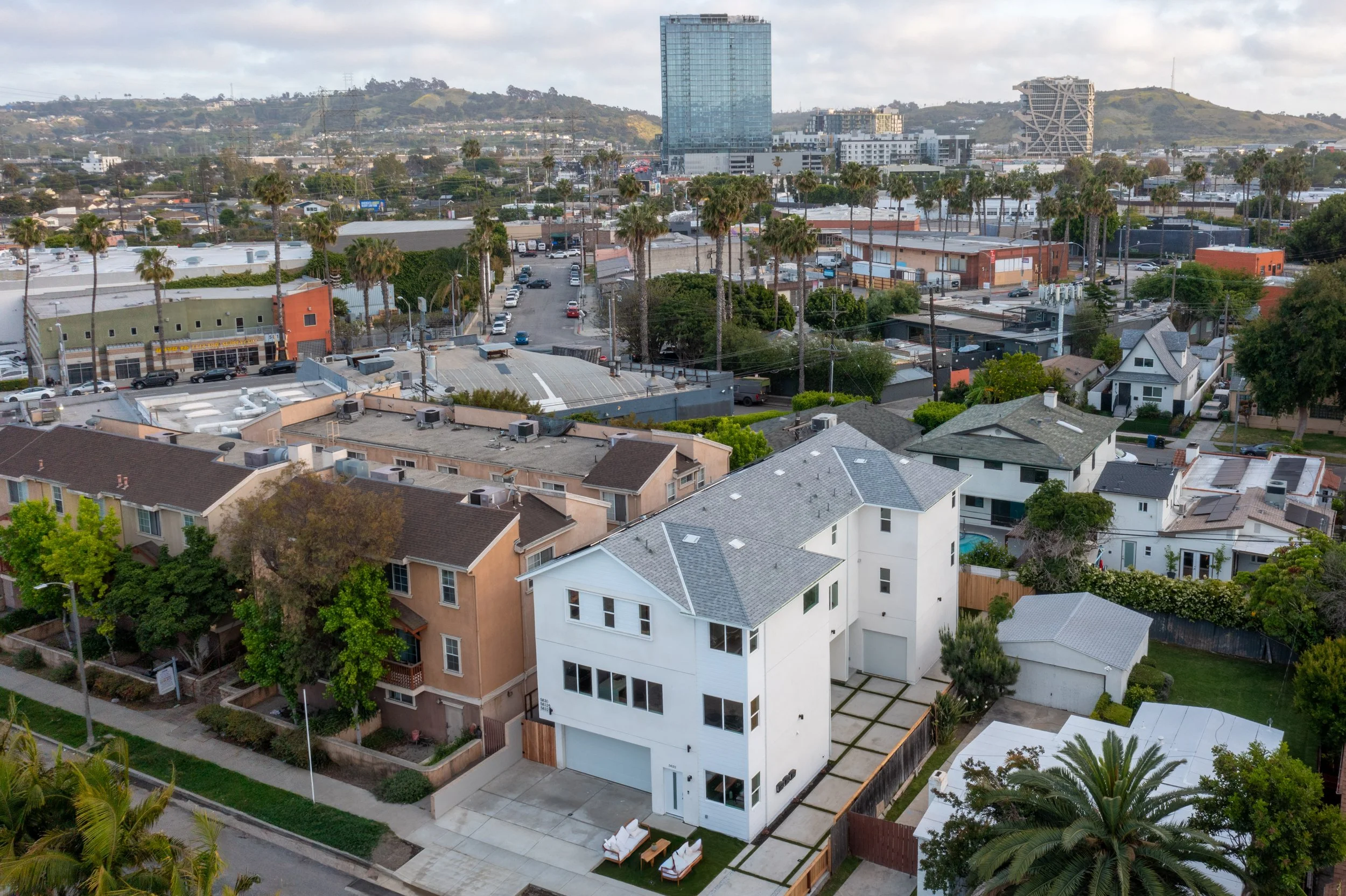
Or see how this plays out in practice: SB 684/1123 Fee Simple Subdivisions.
Work With Us
Investing, or Have a Property?
Contacting us is not an offer, commitment or investment. Any offering is made only through definitive offering documents to eligible investors with whom we have a pre-existing relationship.